Ddolbeng Différences
Deux images, trouve ce qui n'est pas pareil
Gratuit · Sans publicité
Ce que c'est
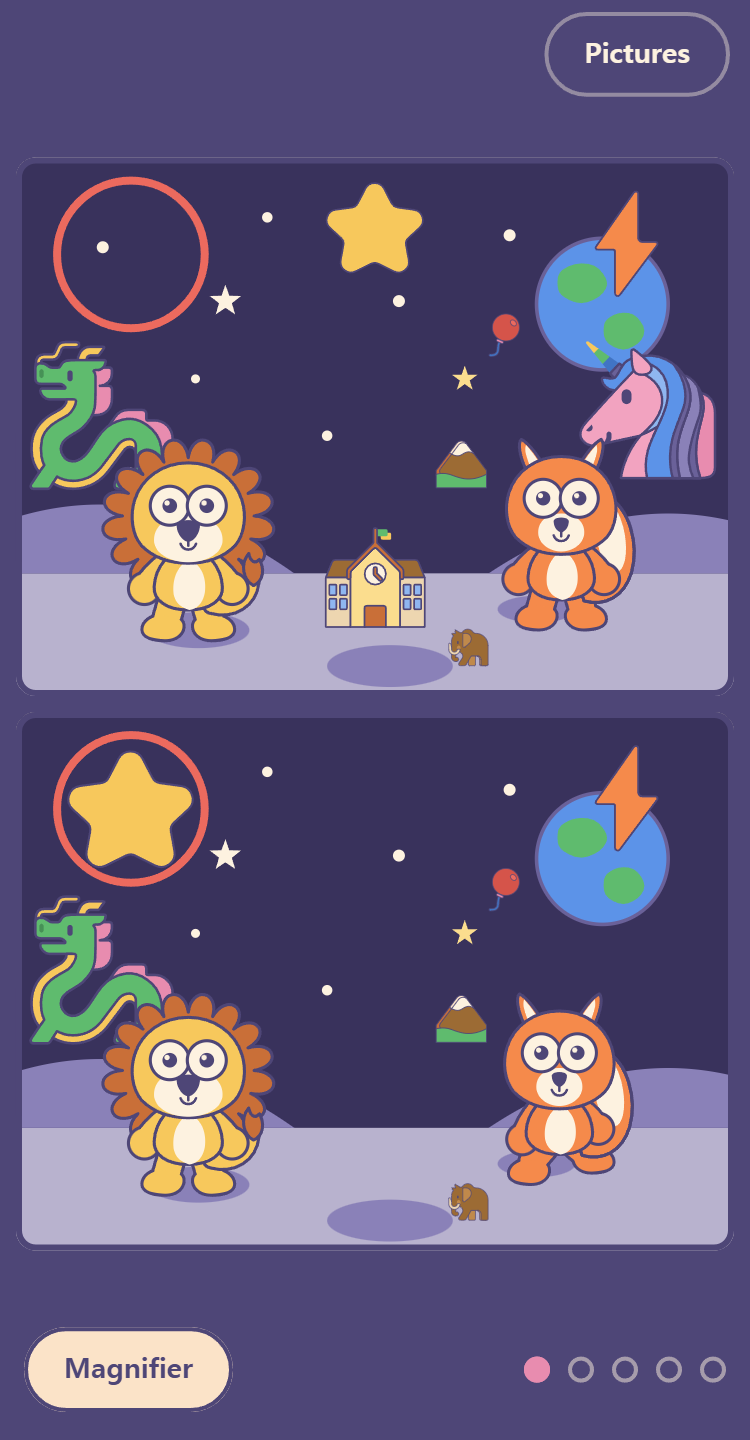
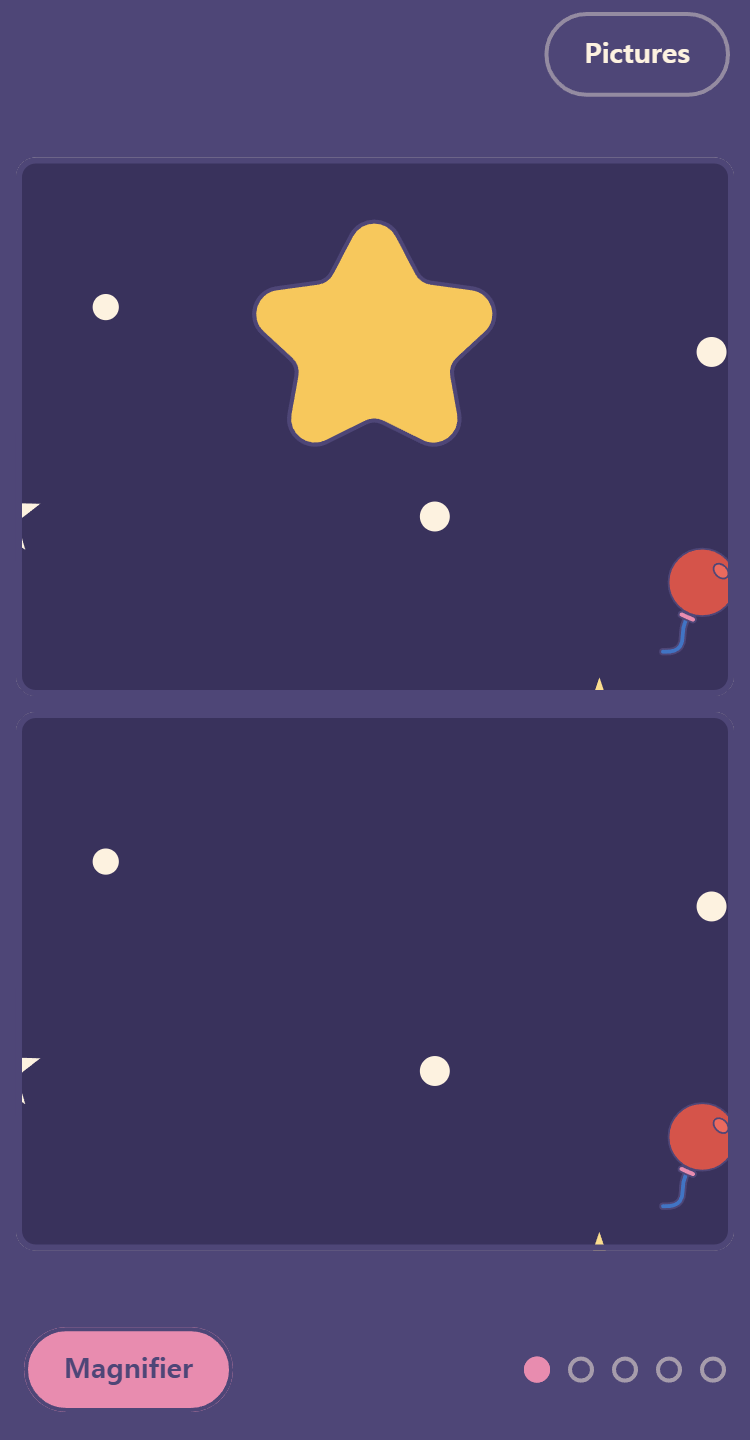
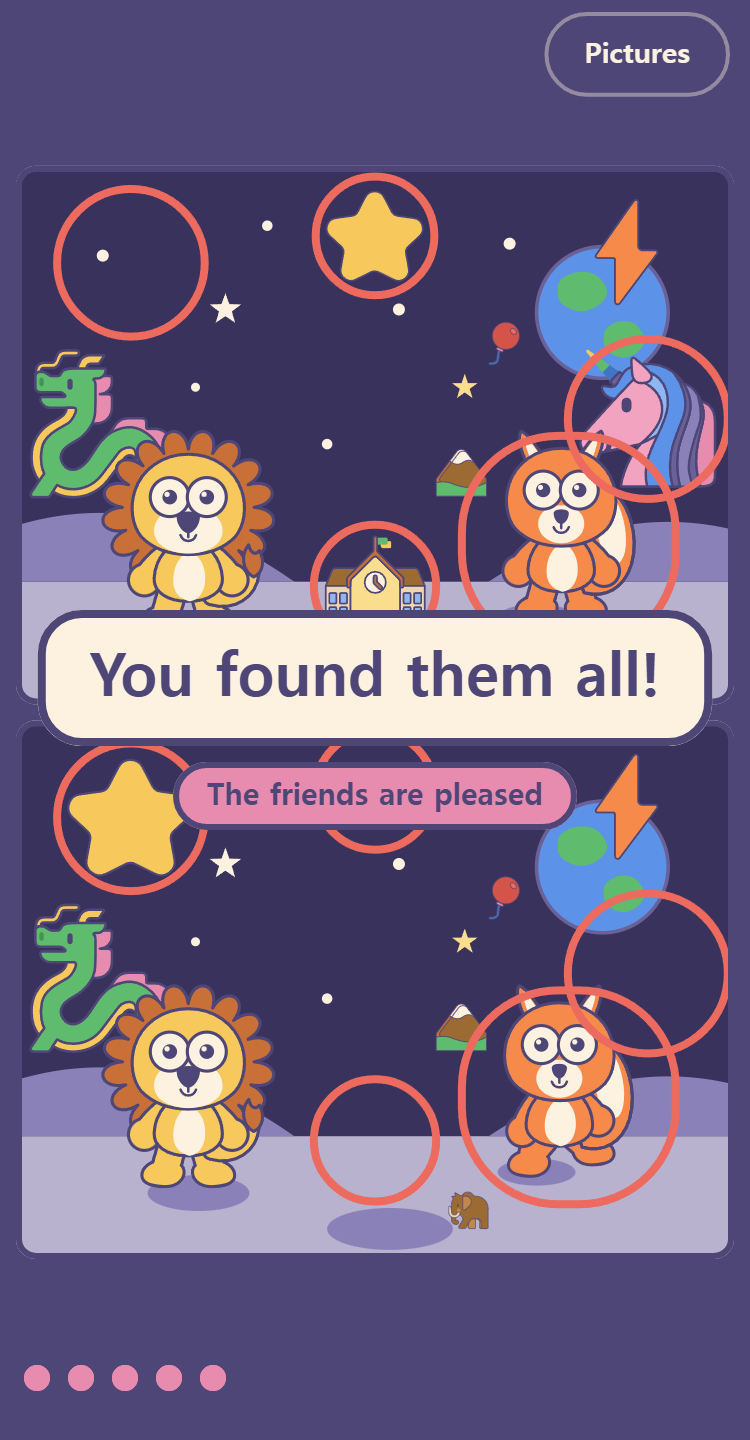
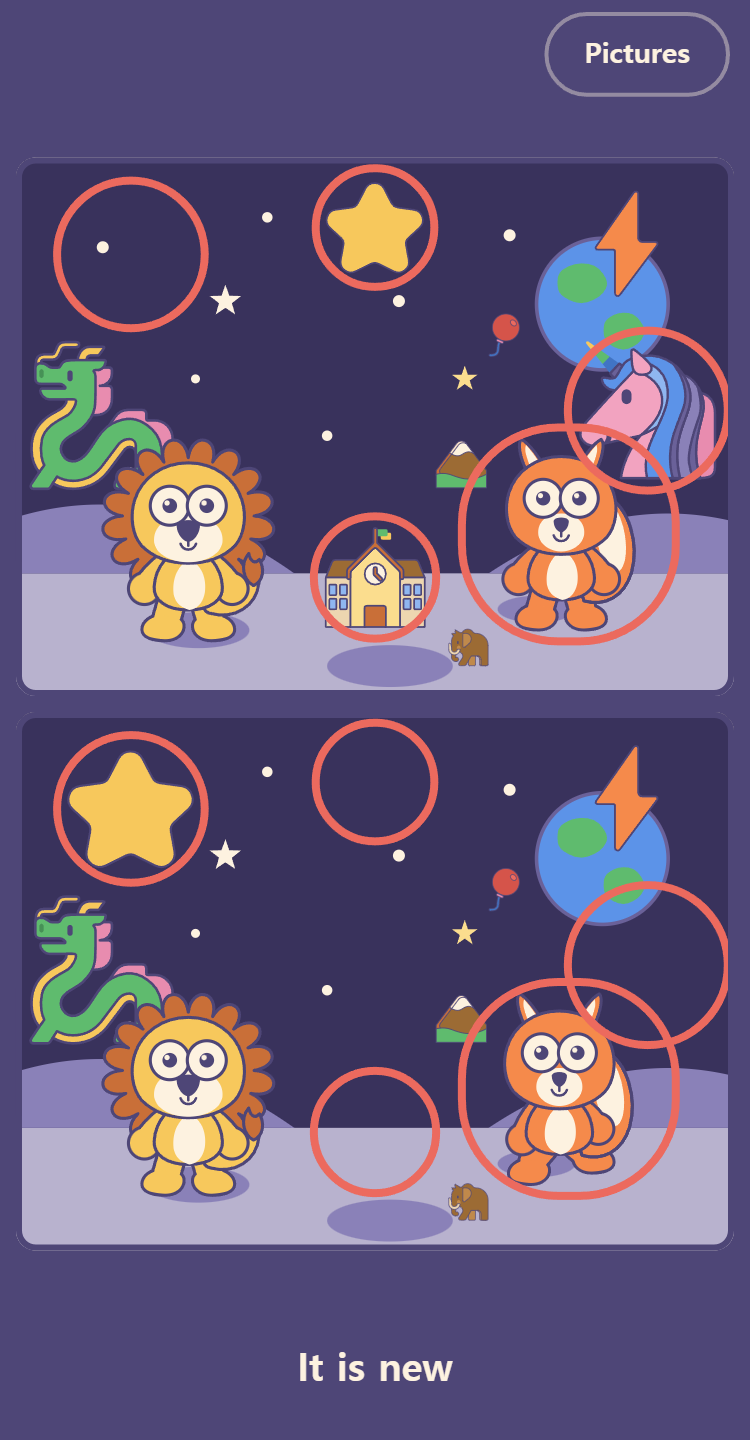
La même image est accrochée deux fois, l'une au-dessus de l'autre. Quelques choses ne sont pas pareilles, et en toucher une trace un cercle sur les deux images à la fois. Quand tout est trouvé, le jeu nomme un à un ce qui a changé - c'est parti, ça a bougé, ça n'a pas la même tête.
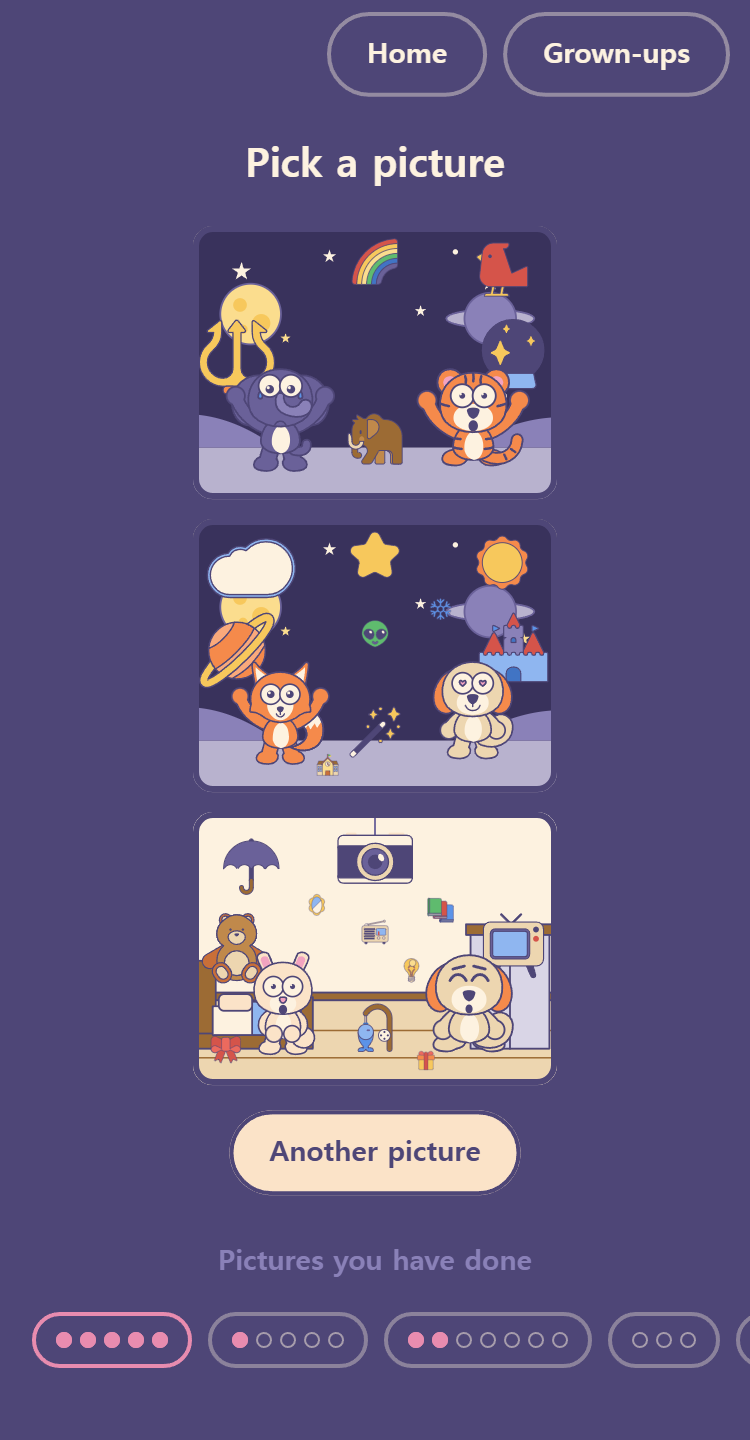
Les images sont fabriquées à chaque fois, et l'enfant choisit lui-même à quel point elle est remplie, du calme au bien chargé. Aucun nom de difficulté nulle part. Le désordre, ça se voit.
Voir les seize jeux en une vidéo
Ce qu'il n'y a pas
- Ni chronomètre ni records. Regarder longtemps, c'est le jeu.
- Toucher au mauvais endroit ne fait rien. Un petit toc, et c'est tout.
- Pas de score, pas d'étoiles, pas de séries.
- Pas de publicité et pas de paiement.
- Pas de compte. Rien n'est jamais envoyé.
Les images passées et les réglages restent sur cet appareil seulement. Les réglages pour les grands s'ouvrent après trois secondes d'appui long.
Comment ça se passe